
Now in its third edition, the report, produced byEpassi in collaboration with think tankPole Star Advisory and researchers from theAalto University School of Business, offers an in-depth analysis of how employers and employees perceive corporate benefits differently, revealingglaring divergences between what companies think they offer and what employees actually take in and want.
With a rigorous methodology and a large sample of participants, The Great Gap 2025 offers a unique insight into the benefits landscape, illuminating the challenges companies face in closing this gap and responding effectively to the changing needs of their employees.
But let's understand more about how it works...
What is The Great Employee Benefits Study and what is it for
The Great Employee Benefits Study, or the "Great Employee Benefits Study" aims to analyze the perceptions and expectations of both parties involved in corporate benefits: employers on the one hand and employees on the other.
Each year, the study collects data on various aspects of corporate welfare, including economic benefits, health support, and work-life balance, and delivers a report that is a clear snapshot of corporate benefits policies,offering useful insights for optimizing corporate strategies and improving employee satisfaction.
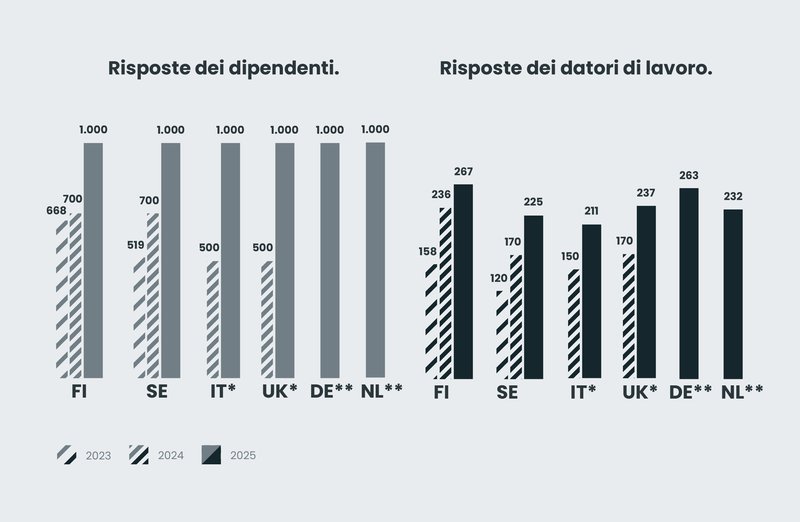
In 2025, the study-now in its 3rd edition-involved a representative sample of employees and employers from several European countries, including also Italy, France, Germany, Spain, the Netherlands, and the United Kingdom, to have a broad geographic scope and thus drawa complete picture of current trends and emerging needs in Corporate Welfare at the European level.
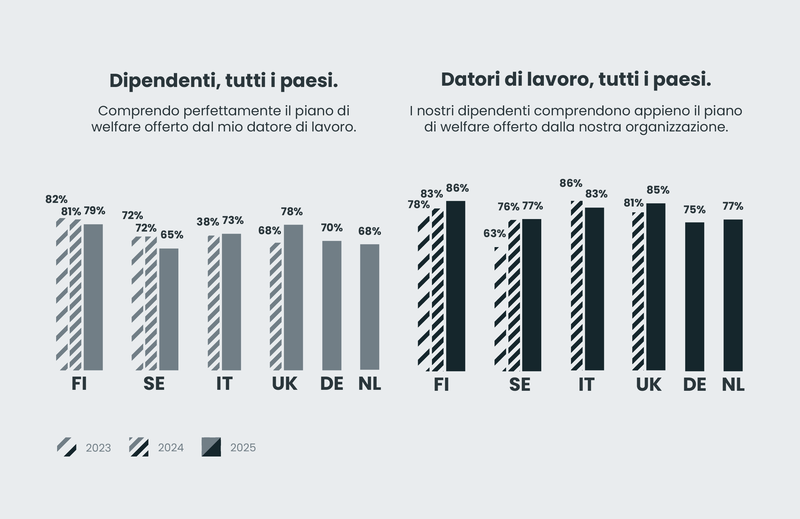
In summary, the study found that perceptions between the two categories (employers and employees) are not always aligned, and that there is still much to be done to bridge this gap between mutual expectations.
The research also revealed that employees today increasingly value personal well-being and work flexibility, aspects that are not always fully met by company policies.
The Great Gap 2025: what does it mean?
The study-regarding italy specifically-was provided by Eudaimon (part of Epassi group) under the very title "The Great Gap 2025," underscoring its key role within the broader discourse that such a concept opens up.
The "Great Gap" 2025 thus refers to the misalignment between the interests of employees and the intentions of organizations, which we mentioned earlier,but what then is the missing link today?
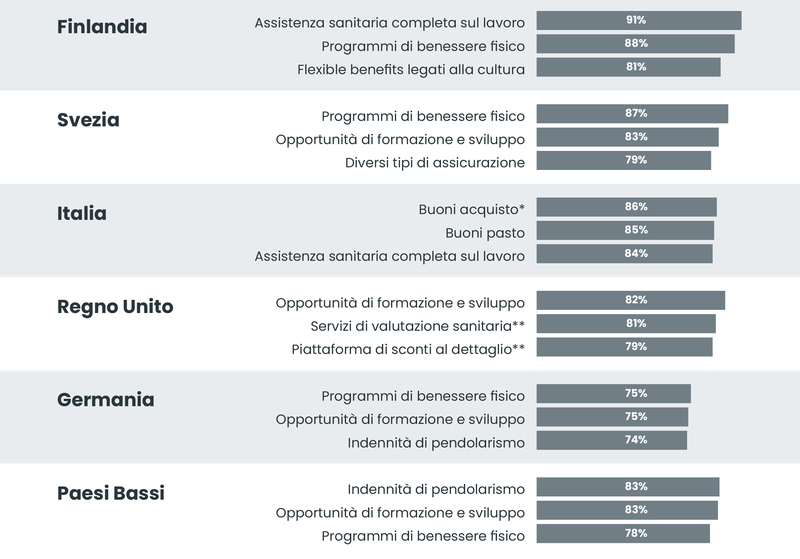
Summing up the study's key concepts in the extreme: while employees want benefits increasingly centered onholistic well-being, such as mental health support, hourly flexibility,work-life blend and beyond, many companies continue to focus on more traditional or financial benefits, without taking into account new emerging needs.
In particular, employees are becoming increasingly aware of the need forwork-life balance, and are seeking work arrangements that allow them to better integrate with their personal lives.
Is there a need for Welfare + People Care?
The importance of personal well-being and emerging trends
Among the key points that emerged in theGreat Gap 2025, personal well-being is confirmed as one of the priorities for employees.
In fact, in addition to physical health, employees are placing increasing emphasis on mental health and psychological support.
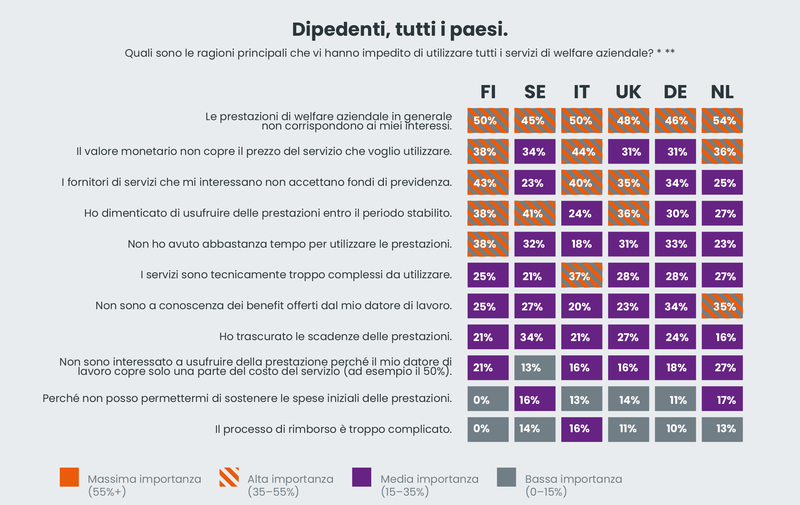
Companies are therefore faced with the need to respond to new needs by offering benefits that go beyond financial support, with the inclusion of psychological care programs, wellness activities, and solutions for improving the quality of work life.
The research also points out that work flexibility, includingremote work and the ability to manage one's own work schedule independently, is becoming equally crucial toattracting and retaining talent, avoidingturnover and related problems.
Further reading, "Who are the talents in the world of work and what do they want?"
Organizations that fail to adapt to these changes risk losing motivated and satisfied employees to companies that offer greater autonomy and benefits more aligned with current needs.
The study thus highlights key opportunities for companies: helpful in understanding a dangerous gap between what employees want and what organizations offer, thinking they are meeting their expectations.
There is a need today to develop benefits strategies that truly respond to workers' priorities and that are able-through ongoing dialogue-not to fossilize but to evolve in step with ever-changing needs, putting well-being, flexibility and work-life integration at the center.
Only in this way will companies be able to meet employees' expectations, improving not only their satisfaction but also productivity and long-term retention.
Download the full report"THE BIG GAP 2025" now.